
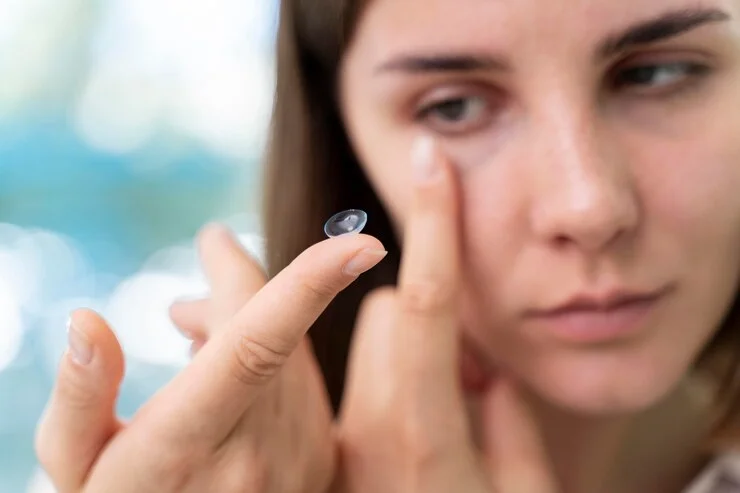
Wearing contact lenses offers freedom and convenience, but for many people, it also comes with discomfort. If your eyes feel gritty, irritated, or tired after wearing lenses, you are not alone. Contact lenses and dry eyes are closely linked, and understanding this connection can help you protect your comfort and long-term eye health.
Dry eye symptoms related to contact lens use can range from mild irritation to persistent discomfort that interferes with daily activities. Knowing why this happens and what you can do about it makes a significant difference.
Why Contact Lenses Can Trigger Dry Eyes
Contact lenses sit directly on the surface of the eye, interacting with the tear film that keeps your eyes moist. When lenses disrupt this natural tear layer, moisture evaporates faster, leading to dryness. This is why many people experience dry eyes wearing contact lenses, especially after long hours of wear.
Environmental factors also play a role. Air conditioning, heating systems, wind, and prolonged screen time can worsen dryness. Over time, this creates a cycle where contact lenses increase dryness, and dryness makes lenses feel uncomfortable.
Common Dry Eye Symptoms With Contact Lenses
Dry eye symptoms contact lenses users often notice include burning sensations, redness, blurry vision, sensitivity to light, and a feeling that something is stuck in the eye. Some people experience excessive tearing, which may seem confusing but is actually the eye’s response to irritation.
If lenses feel dry or uncomfortable before the end of the day, it may be a sign that your eyes are not producing enough quality tears to support lens wear.
Can You Wear Contact Lenses With Dry Eyes
A common question is, can a person with dry eyes wear contacts. The answer depends on the severity of the condition and the type of lenses used. Many people with mild to moderate dry eye can still wear contacts safely with the right adjustments.
Modern lens materials are designed to retain moisture better, making it possible for some individuals with dryness to continue wearing lenses comfortably. An eye care professional can determine whether it is safe for you and recommend the best contact lens for dry eyes based on your needs.
Choosing the Right Contact Lenses and Solutions
Not all lenses are created equal. Some materials allow more oxygen to reach the eye and hold moisture more effectively. Daily disposable lenses are often recommended because they reduce protein buildup and dryness.
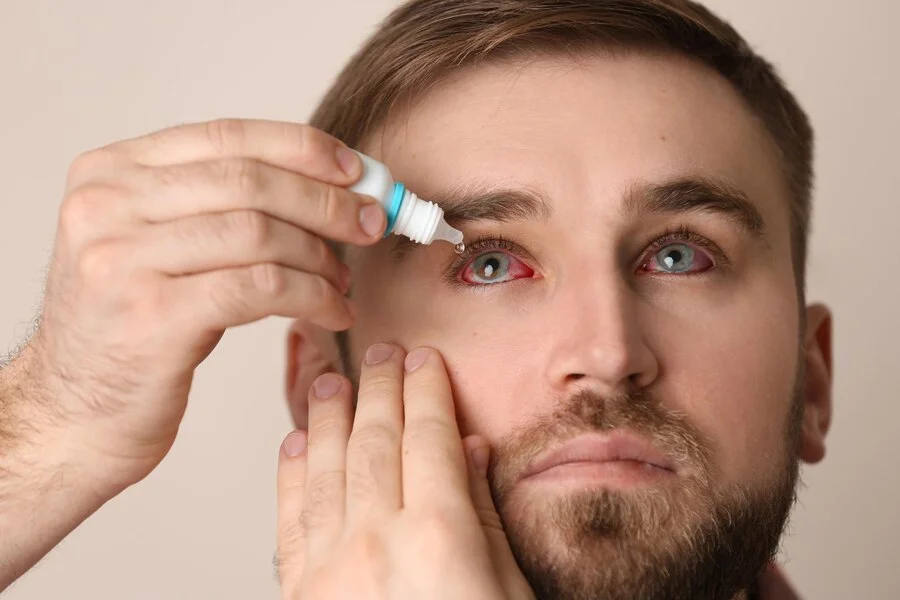
Using a dry eyes contact lens solution is equally important. A high-quality best contact lens solution for dry eyes can help maintain moisture and reduce irritation throughout the day. Avoid solutions with harsh preservatives if you have sensitive eyes.
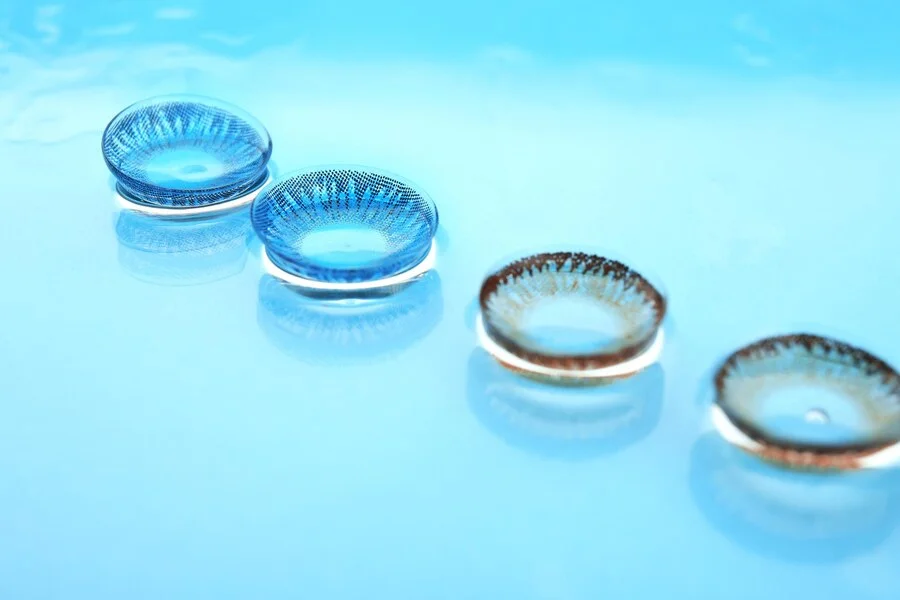
For those interested in cosmetic lenses, selecting the best color contact lenses for dry eyes is essential. These lenses should be breathable and approved by an eye care professional to avoid worsening dryness.
How to Fix Dry Contact Lenses
If your lenses feel dry during the day, you may wonder how to fix a dry contact lens. Rewetting drops designed for contact lens wear can provide temporary relief. However, frequent dryness should not be ignored.
Understanding how to fix dry contact lenses also involves addressing habits. Reducing screen time, blinking more often, staying hydrated, and taking breaks from lens wear can all help. If discomfort persists, switching lens types or adjusting your wear schedule may be necessary.
When Dry Eyes and Contact Lenses Become a Problem
If you constantly ask yourself, can you wear contact lenses with dry eyes, it may be time for a professional evaluation. Persistent dryness can lead to inflammation and increase the risk of infection if left untreated.
People experiencing contacts dry eyes symptoms should avoid pushing through discomfort. Wearing lenses despite irritation can worsen dry eye disease over time. Early intervention protects both comfort and eye health.

Treatment Options for Dry Eyes With Contact Lenses
Treatment depends on the cause and severity of dryness. Options may include artificial tears, prescription eye drops, lifestyle changes, or specialized therapies. An eye doctor can also recommend the most effective dry eye contact lens solution or alternative vision correction methods.
In some cases, temporarily switching to glasses allows the eyes to heal while dry eye symptoms are treated.
Supporting Long-Term Eye Comfort
Managing contact lenses and dry eyes is about balance. With proper lens selection, good hygiene, and professional guidance, many people can enjoy clear vision without constant discomfort. Regular eye exams are essential to monitor changes and adjust treatment as needed.
Ignoring symptoms can lead to chronic dry eye, which is more difficult to manage. Listening to your eyes and seeking care early makes all the difference.
Final Thoughts
Dryness does not mean you must give up contact lenses, but it does mean your eyes need extra attention. By understanding the link between contact lenses and dry eyes, choosing the right lenses and solutions, and seeking professional advice, you can protect your comfort and vision.
If dry eye symptoms are affecting your daily life, an eye care professional can help you find solutions that keep your eyes healthy and comfortable.